
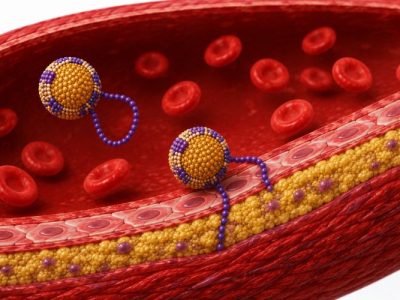
Most people have heard of LDL (“bad”) cholesterol, very few know about or understand lipoprotein(a), or Lp(a) (pronounced “lipoprotein little a”).
What Is Lipoprotein(a)?
Lipoprotein(a) is an LDL (“bad cholesterol”) particle with an extra protein attached called apolipoprotein(a). This protein acts like a tail, making the particle stickier and accelerating plaque formation, promoting inflammation, and interfering with the body’s ability to dissolve blood clots.
Facts about Lp(a):
High Lp(a) is now recognized as a causal risk factor for:
- Coronary artery disease
- Heart attack
- Stroke
- Peripheral artery disease
- Calcific aortic valve stenosis
Approximately 1 in 5 people (20–25% of the world’s population) has elevated Lp(a).
Lp(a) levels are determined almost entirely by your genes.
Lp(a) is not influenced by lifestyle, unlike LDL cholesterol.
Lp(a) levels remain relatively stable throughout life after about 5 years of age.
Lp(a) should be checked only once in a lifetime unless new evidence or clinical circumstances indicate otherwise.
Should You Be Tested?
Recognizing its role as a causal cardiovascular risk factor, major cardiovascular societies now recommend measuring Lp(a) at least once during adulthood for everyone, particularly if you have:
- A personal or family history of heart attack or stroke at a young age
- Inherited cholesterol disorders
- Very high LDL (“bad”) cholesterol
- Recurrent cardiovascular events despite well-controlled LDL cholesterol
- A first-degree relative with elevated Lp(a)
- Calcific aortic valve stenosis
What Is Considered Elevated?
Most guidelines consider ≥50 mg/dL (≈125 nmol/L) to be elevated.
Lp(a) particle size varies from person to person. The mass (mg/dL) may be similar, but the number of particles (nmol/L) can be very different. This is why the units cannot be directly converted.
Many lipid experts and professional societies prefer nmol/L because it reflects the actual number of Lp(a) particles circulating in the bloodstream, which is thought to better represent the number of particles capable of entering the artery wall.
Can Lifestyle Lower Lp(a)?
Even though lifestyle does not lower Lp(a) levels, it still plays a major role.
Here is an analogy: consider cardiovascular disease as a fire. Elevated Lp(a) is one log on the fire. High blood pressure, diabetes, smoking, poor nutrition, physical inactivity, poor sleep, and chronic stress are the other logs on the fire. While we may not be able to remove the Lp(a) log, we can prevent the fire from becoming an inferno by removing the other logs.

What Can I do to lower my risk?
Current treatment focuses on reducing overall cardiovascular risk, especially through aggressive lowering of LDL cholesterol. This can be achieved with a combination of optimal nutrition, other healthy lifestyle habits, and medications.
The most important lifestyle strategies include:
- Choosing a whole-food, plant-predominant eating pattern, limiting ultra-processed foods, saturated fats, refined sugars, and processed meats
- Staying physically active
- Maintaining healthy blood pressure
- Preventing or controlling diabetes
- Avoiding smoking and vaping
- Achieving healthy sleep (7–9 hours nightly)
- Managing stress through meditation, mindfulness, breathing exercises, and meaningful social connection
This is where epigenetics becomes fascinating. Remarkably, studies have shown that intensive lifestyle changes can alter the expression of hundreds of genes involved in inflammation and disease pathways.
Are There Medications on the Horizon?
Yes. Several medications specifically designed to lower Lp(a) are currently in late-stage clinical trials.
The Bottom Line
Your genes load the gun. Your lifestyle helps determine whether the trigger is pulled.
While you cannot choose the genes you inherited, you can choose the environment in which those genes function. That is the power of lifestyle medicine.
Key Take-Home Points
- Lp(a) is an inherited LDL-like particle with an added protein: more atherogenic, inflammatory, and thrombogenic.
- About 20–25% of people have elevated Lp(a).
- A level of ≥50 mg/dL (≈125 nmol/L) is considered elevated by most major guidelines.
- Elevated Lp(a) is a causal risk factor for cardiac and vascular events.
- Lifestyle has little effect on Lp(a) levels but remains critical for lowering overall cardiovascular risk.
- Current management emphasizes intensive control of LDL cholesterol and other modifiable risk factors.
- Highly effective Lp(a)-targeted therapies are in late-stage clinical development.