“Mind. Body. Soul. These are the three things self-care is all about.” Kathy Sledge

A Whole Food Plant Based Diet (WFPBD) includes minimally processed foods like whole grains, fruits, vegetables, legumes, and seeds. It is naturally low in salt, free sugars, and saturated or trans-fats. It aligns well with the World Health Organization’s definition of a healthy diet.
Shifting to this lifestyle offers a wide range of physical and mental health advantages:
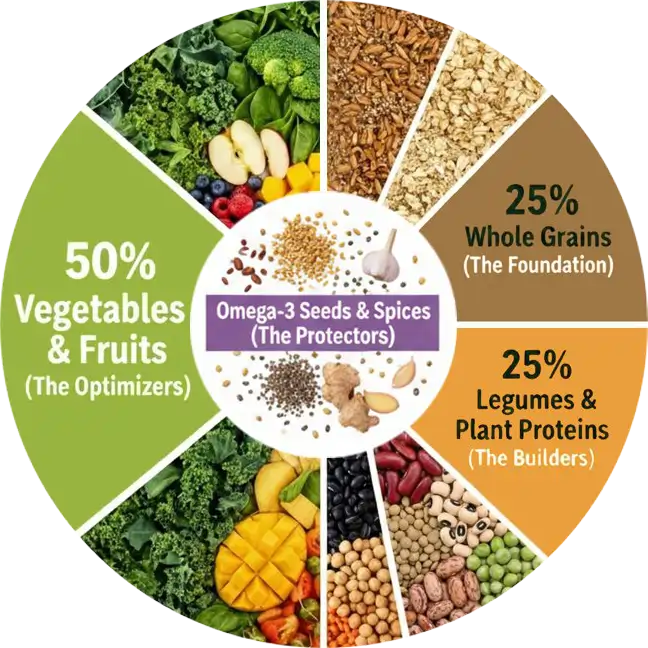

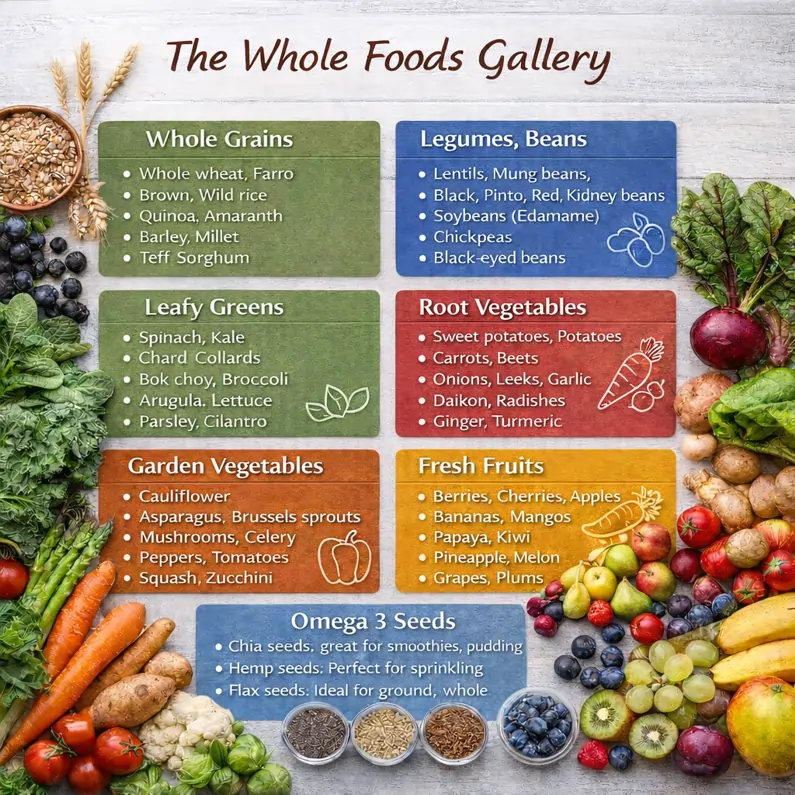
Include as many minimally processed plant foods as possible as seen in the “whole foods gallery” image. In addition, minimally processed whole soy products—such as tofu, edamame, miso, and tempeh—are acceptable and provide all the health benefits of a plant-centered diet.
Water is the best beverage, and caffeine intake should be limited.
Overconsumed foods in the United States include:
Guidelines to Keep in Mind:
Underconsumed nutrients across the U.S. population include calcium, choline, fiber, magnesium, potassium, vitamins A, C, D, E, and K. Among these, calcium, fiber, potassium, and vitamin D deficiencies pose significant public health concerns. A whole-food, plant-based diet can supply all of these nutrients except vitamin D.
Bottom line:
Eat a variety of minimally processed plant foods, limit added sugars, saturated fat, and sodium, and focus on key nutrients to support overall health.
The Evidence:
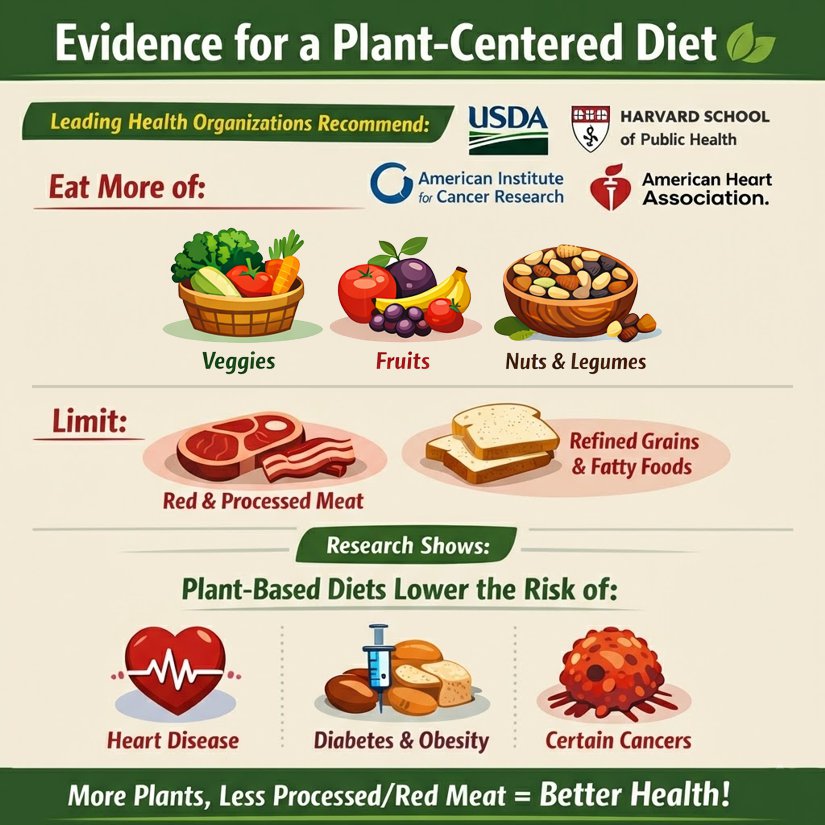
A review of 78 clinical guidelines from major medical societies (2010–2021) consistently recommends eating vegetables, fruits, whole grains, legumes, nuts, seeds, low-fat dairy, and fish/seafood while limiting red and processed meats, refined grains, and high-fat animal products.
Decades of research—from large cohort studies like Harvard Nurses’ Health Study (NHS), Harvard Health Professionals Follow-up Study (HPFS), Women’s Health Initiative (WHI), European Prospective Investigation into Cancer and Nutrition (EPIC Oxford), Seventh-Day Adventist Health Study (AHS), Framingham Heart Study, Multi-Ethnic Study of Atherosclerosis (MESA), and the National Health and Nutrition Examination Survey (NHANES)—as well as randomized controlled trials including the Lyon Heart Study, OmniHeart Trial, DASH Trial, and PREDIMED Trial—show a clear pattern:
Diets rich in plant-based foods reduce the risk of heart disease, metabolic disorders, and certain cancers.
Several medical/Health organizations now endorse a plant-centered diet.
Bottom line: More plants, less processed/red meat = better health.
Why Isn’t This Diet Recommended by All Doctors?
Despite overwhelming evidence supporting the benefits of a whole-food, plant-based diet (WFPBD), many physicians on the frontlines of chronic disease care are not fully aware of this knowledge. Most medical training provides little nutrition education—less than 30% of U.S. medical schools offer the recommended 25 hours over four years, and even this rarely translates into practical counseling skills.
Additionally, the current healthcare system and reimbursement model often leave physicians with limited time to discuss lifestyle and dietary changes. Those who are motivated often seek additional training, earn certification in Lifestyle Medicine, and take a root-cause approach to patient care.
Finally, some physicians may hesitate to recommend WFPBD due to concerns that patients might perceive it as extreme or difficult to adopt.
Interestingly, several leading health organizations—including the American Heart Association (AHA), American Diabetes Association, U.S. Department of Agriculture (USDA), Dietary Guidelines Advisory Committee, American Institute for Cancer Research, Kaiser Permanente, and the Harvard School of Public Health—recommend a plant-centered diet.